
Victoria lifted the granny flat size limit from 60m² to 80m², often with no planning permit needed. Here's what changed, the rules that still apply, and the catch.
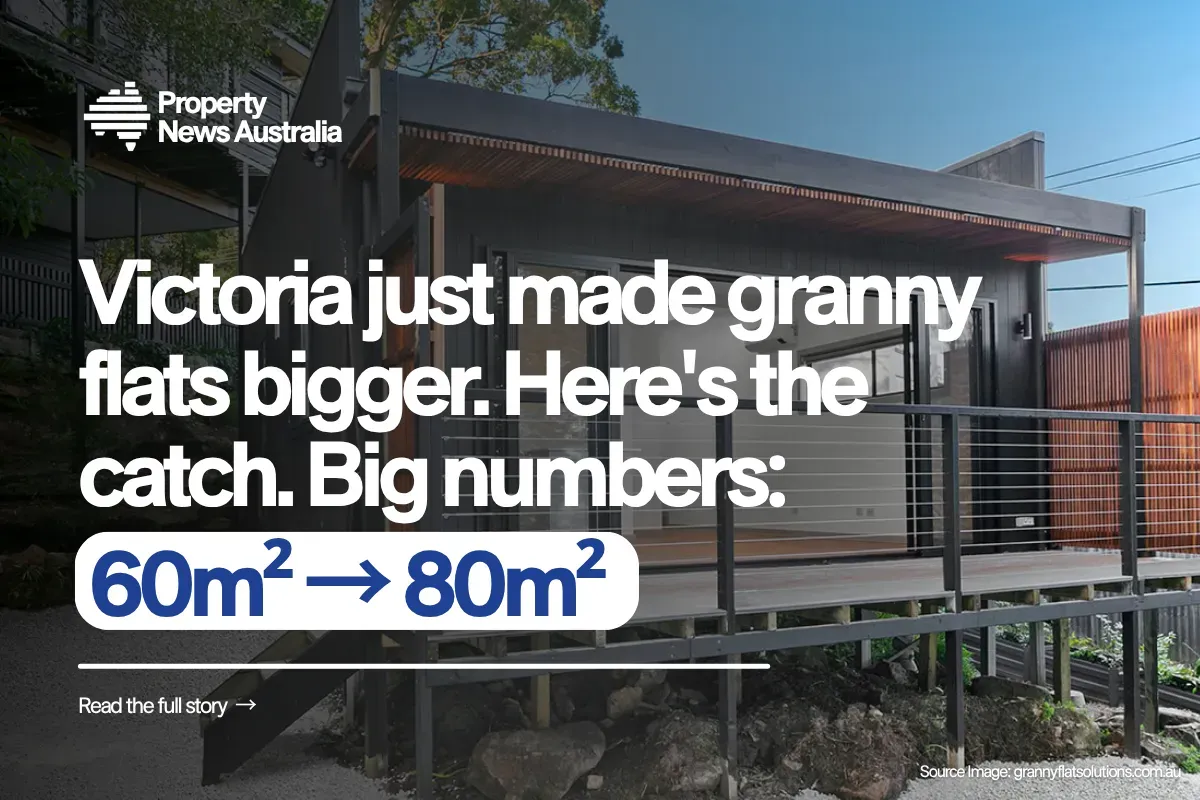
Since 15 October, Victorians can build a granny flat up to 80 square metres, up from 60, often without a planning permit. But there's a catch: the other rules haven't changed, and some can still stop a build.
Got a big backyard? Victoria just gave you more to work with.
On 15 October, the state lifted the size limit for a granny flat from 60 to 80 square metres.
That's a third more room.
Here's what changed, what didn't, and the catch you need to know about before you draw up plans.

In Victoria's planning rules, a granny flat is called a "small second dwelling". It's a self-contained home on the same block as an existing house, with its own kitchen, bathroom and toilet.
According to Planning Victoria, the new rules made three changes.
Rule | Before 15 October 2026 | From 15 October 2026 |
|---|---|---|
Maximum size | 60m² | 80m² |
Roofed decks and verandahs | Counted in the size | Not counted |
Planning rule for an access path | Required | Removed |
It can be bigger. The limit is now 80 square metres.
It's measured differently. The size is measured from the outside of the walls. Roofed decks, verandahs and pergolas attached to the granny flat no longer count.
One rule is gone. The planning requirement for an access path has been removed. National building standards already cover access.
Victoria now rates flood risk on five levels, from low to extreme. Here's what each level means for building and renovating, and why insurers are watching closely.
Permits, DIY electrical work, asbestos, inspections, contracts and flip tax. We check 6 common renovation and flipping myths against official sources.


Usually not a planning permit. Planning Victoria says a granny flat normally doesn't need one in residential and rural zones.
There are exceptions. A planning permit is needed if the block is under 300 square metres in a residential zone, or if the land is in certain rural or green wedge zones.
Overlays can also apply. In heritage, design or neighbourhood character overlays, no planning permit is needed if the granny flat is no higher than 5 metres and finished in muted colours.
You do need a building permit. Planning Victoria says one is normally required for every granny flat.
Some costs are waived. No car parking is required, and granny flats are exempt from development and community infrastructure levies.

The planning rules changed on 15 October. The building rules followed on 27 October.
The Department of Transport and Planning says Victoria's Building Regulations have been updated to match the new 80 square metre limit.
So the size limit is now the same in both sets of rules. The catch is everything else.
The other rules that decide whether a granny flat can be built haven't changed. A small block, an overlay, a covenant or a large tree can still mean a permit is needed, or stop the build altogether.
One per block. There can only be one existing house and one granny flat on the lot.
No gas. Under the zone rules, a granny flat can't be connected to a mains gas supply.
No selling it off. A granny flat can't be split onto its own title or sold separately from the main house.
Check the title. A restrictive covenant or a section 173 agreement on the land may stop a granny flat being built. Planning Victoria says it's up to owners to check.
Trees count. Removing or cutting back a large canopy tree may need a planning permit.

Yes. Planning Victoria says there are no restrictions on who can live in a granny flat.
But rental laws apply, including Victoria's minimum standards for rental homes.
Councils decide whether a granny flat is rated and valued separately from the main house.
And for tax, Chartered Accountants ANZ has said granny flats generally don't count as new builds under the federal negative gearing changes.
This article is general information only. It isn't financial, tax or legal advice. Talk to a licensed professional about your own situation.
The new 80 square metre limit makes granny flats a much more useful option for Victorian homeowners.
But the other rules haven't changed, so the checks matter as much as the extra space.
The block, the title and the building surveyor will decide what can be built.
A building inspection is a visual check with limits. Here's what it covers, what it often misses, and why timing matters at auction versus a private sale.