
Victoria now rates flood risk on five levels, from low to extreme. Here's what each level means for building and renovating, and why insurers are watching closely.
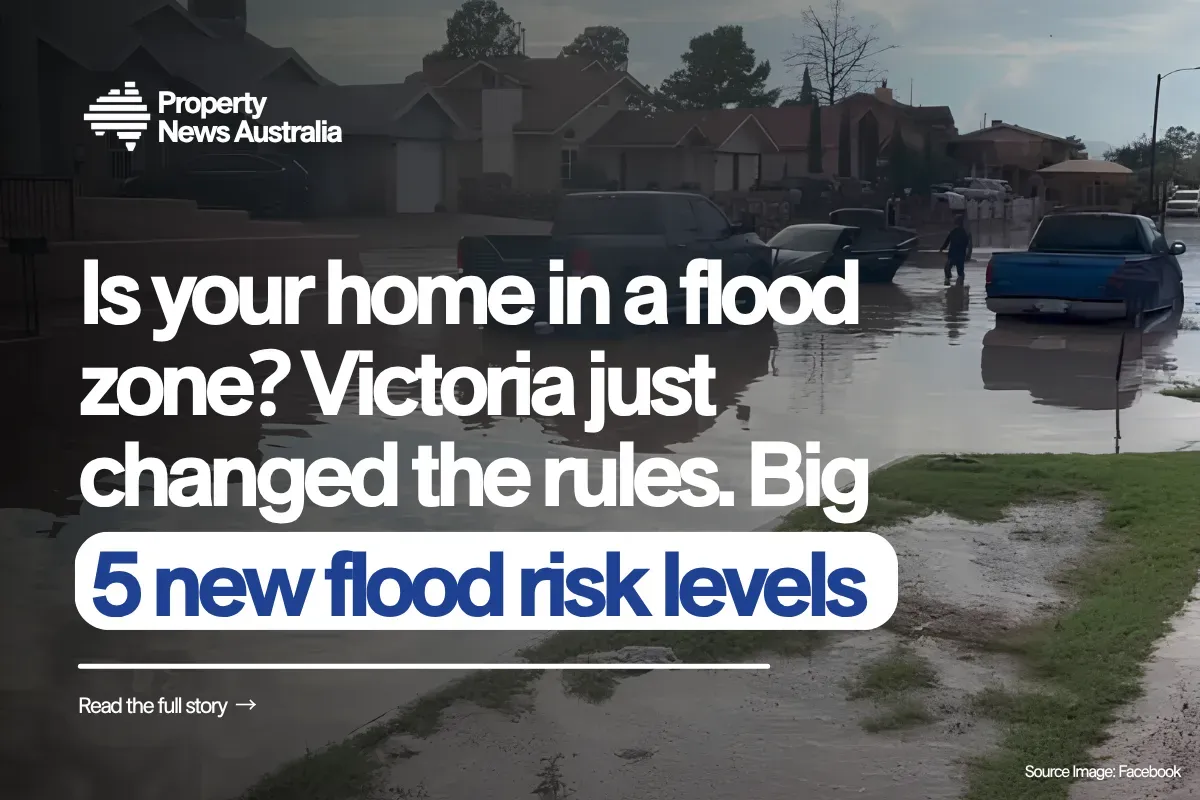
Victoria now rates flood risk on a five-level scale, much like bushfire ratings. It will decide where homes can be built, how they're built, and how hard it is to renovate near water.
Victoria has a new way of rating flood risk.
In October, the state brought in new flood planning rules. They're tied to a five-level Flood Risk Rating, from low to extreme.
The rating will shape where new homes can go, what can be built, and the building standards they have to meet.
And there's a new online tool that lets you search for your address.

According to Planning Victoria, the five ratings are:
Rating | Risk level | What it means |
|---|---|---|
FRR 1 | Low | Risk managed through minimum building standards only |
FRR 2 | Moderate | Risk can generally be managed with the right safeguards |
FRR 3 | High | Building needs careful assessment |
FRR 4 | Very high | Building generally should be avoided |
FRR 5 | Extreme | Building generally inappropriate |
The ratings are applied to flood maps. Planning Victoria says its new Flood Risk Rating tool is searchable by address, and will show a rating once the new rules are applied to that area.
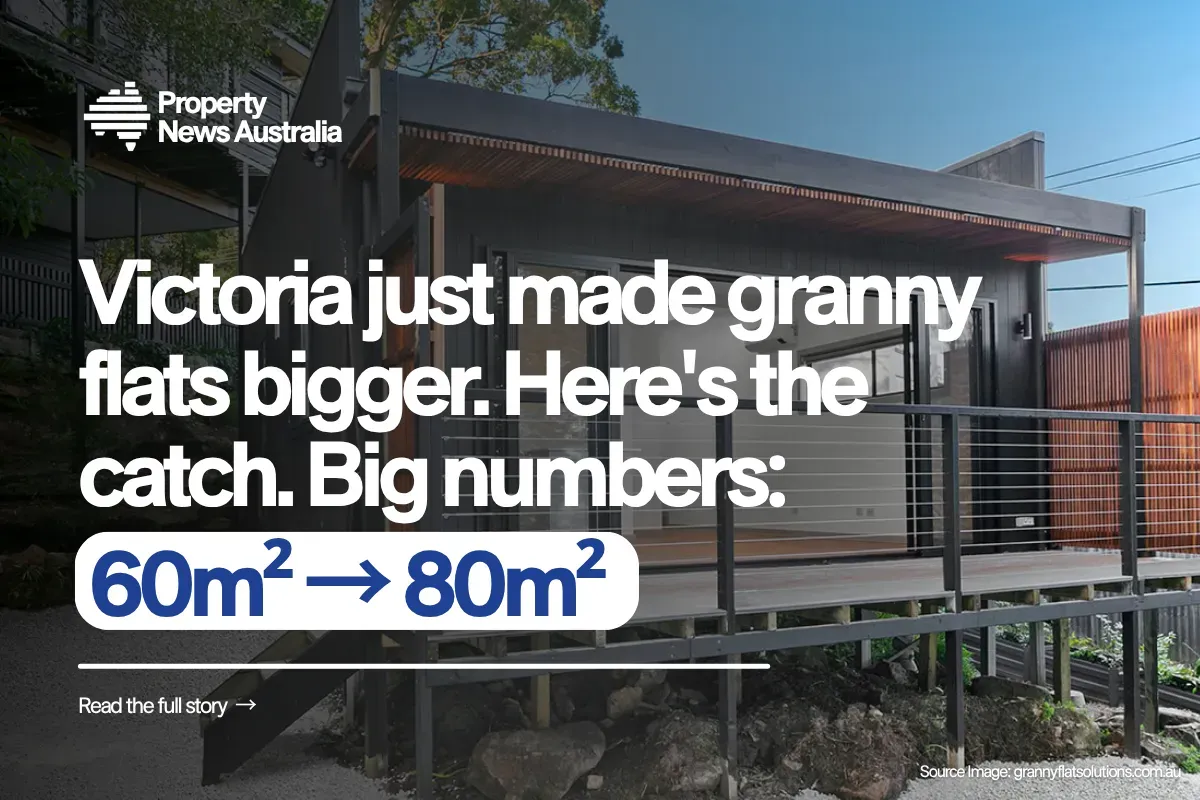
Victoria lifted the granny flat size limit from 60m² to 80m², often with no planning permit needed. Here's what changed, the rules that still apply, and the catch.
Permits, DIY electrical work, asbestos, inspections, contracts and flip tax. We check 6 common renovation and flipping myths against official sources.
This part is good news.
In low-risk areas, Planning Victoria says flood risk will be handled through the building system instead of the planning system.
That means no planning application just for flooding. Planning Victoria says this will avoid unnecessary delays and give owners more certainty.

At the other end of the scale, the rules get much tougher.
In very high-risk areas, building is generally not recommended. In extreme-risk areas, it's generally considered inappropriate.
The new rules bring in a Flood Management Zone and a Flood Management Overlay for higher-risk land.
On flood-affected land, a planning permit may be needed for buildings or works. Applications are sent to the local flood authority, such as Melbourne Water or a catchment management authority, for advice.
The new rating won't appear everywhere straight away.
Town planners Equinox say the new zone and overlay will be added progressively, as flood studies are updated. Until then, the existing flood overlays still apply.
Planning Victoria says Melbourne Water will keep releasing updated flood maps across Greater Melbourne over the next few years.
So a property's flood rules could change as new maps come out.

Floor heights matter. The Victorian Ombudsman says the Building Regulations require homes in flood areas to be built with a safety buffer of at least 30cm above the flood level.
Extensions can need a permit. On flood-affected land, an extension or other works may need a planning permit and advice from the flood authority.
The building rules have changed too. New Building Regulations that took effect on 27 October include updates for designated flood-prone areas.
Buyers do the homework. The Glenelg Hopkins Catchment Management Authority says buyers are responsible for checking a property's flood risk before they buy.

The Insurance Council of Australia has backed the new rules.
It says about 1.36 million Australian properties have a severe to extreme flood risk, mostly in New South Wales, Queensland and Victoria.
It also says declared disaster events damaged more than 145,000 homes in 2025. That's almost as many as the 172,000 new homes built across Australia that year.
Insurance Council deputy CEO Kylie Macfarlane put it simply: "The most expensive home is the one you build twice."
Industry publication Insurance Business has reported that the new ratings could give insurers more precise data, which may lead to premiums that better match each property's risk.
This article is general information only. It isn't financial, tax or legal advice. Talk to a licensed professional about your own situation.
Victoria's new flood ratings make risk easier to see, property by property.
For low-risk homes, that could mean faster approvals. For high-risk land, it could mean tight limits or no building at all.
Before planning a renovation near a creek, river or drain, the flood rating is the first thing worth checking.
A building inspection is a visual check with limits. Here's what it covers, what it often misses, and why timing matters at auction versus a private sale.